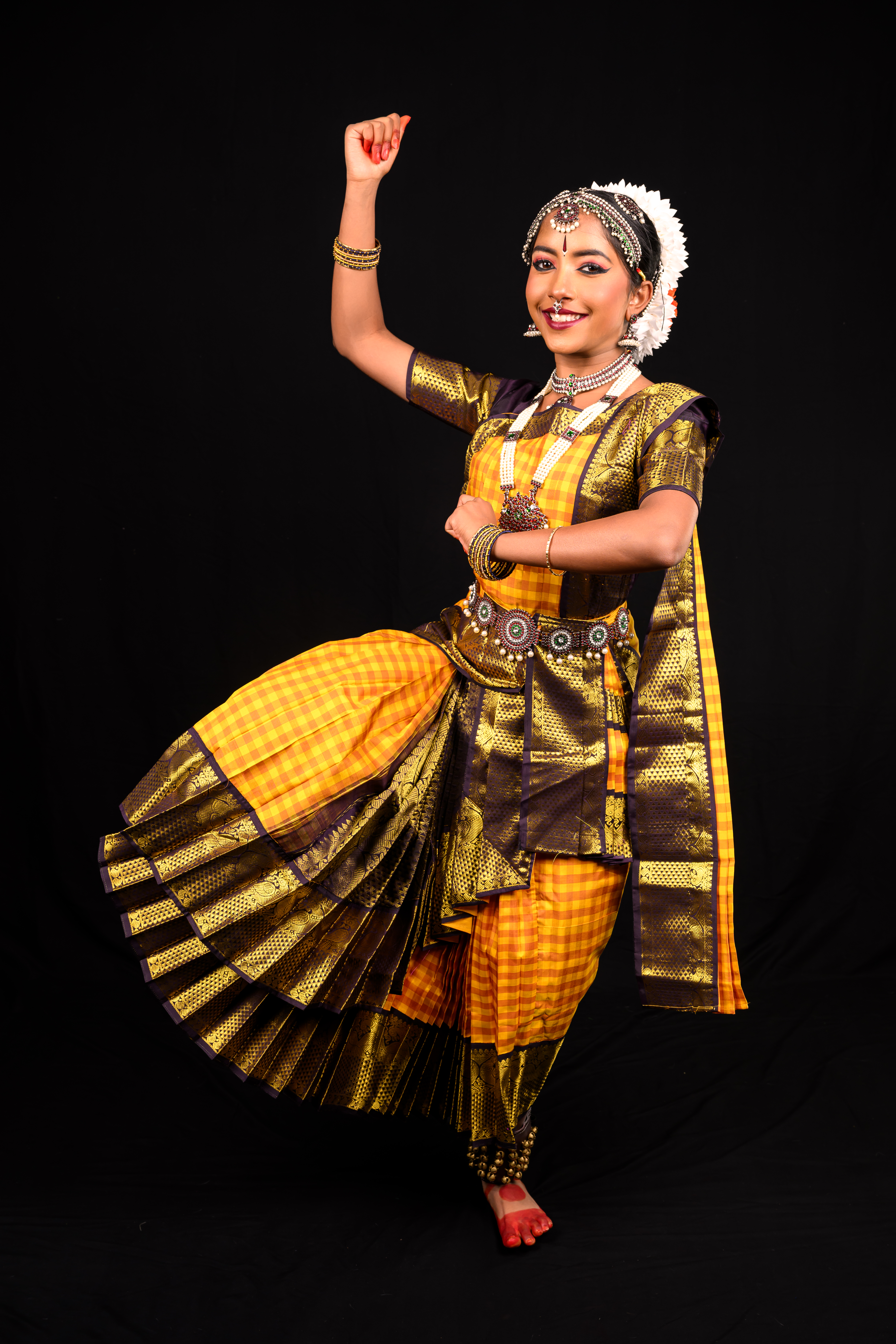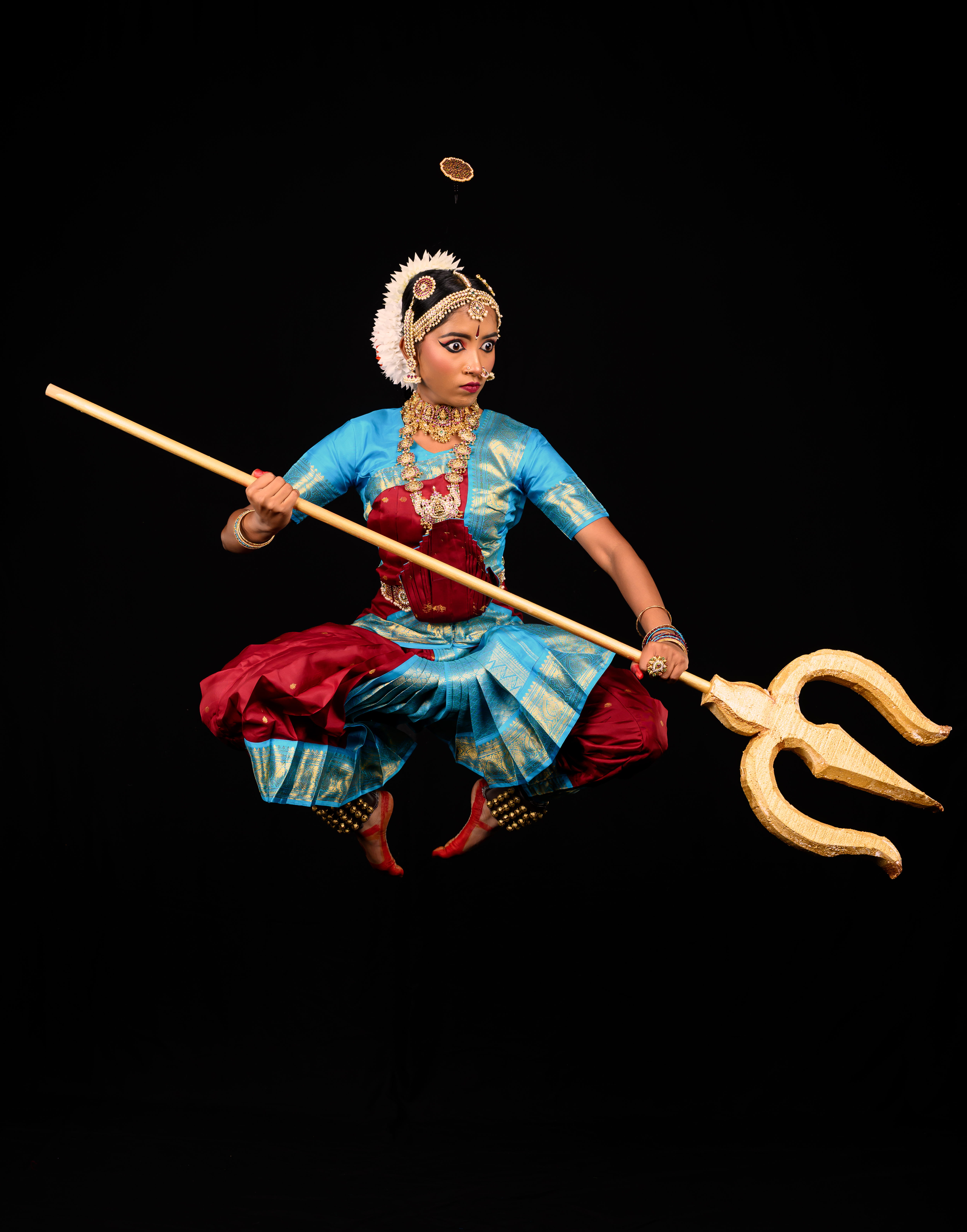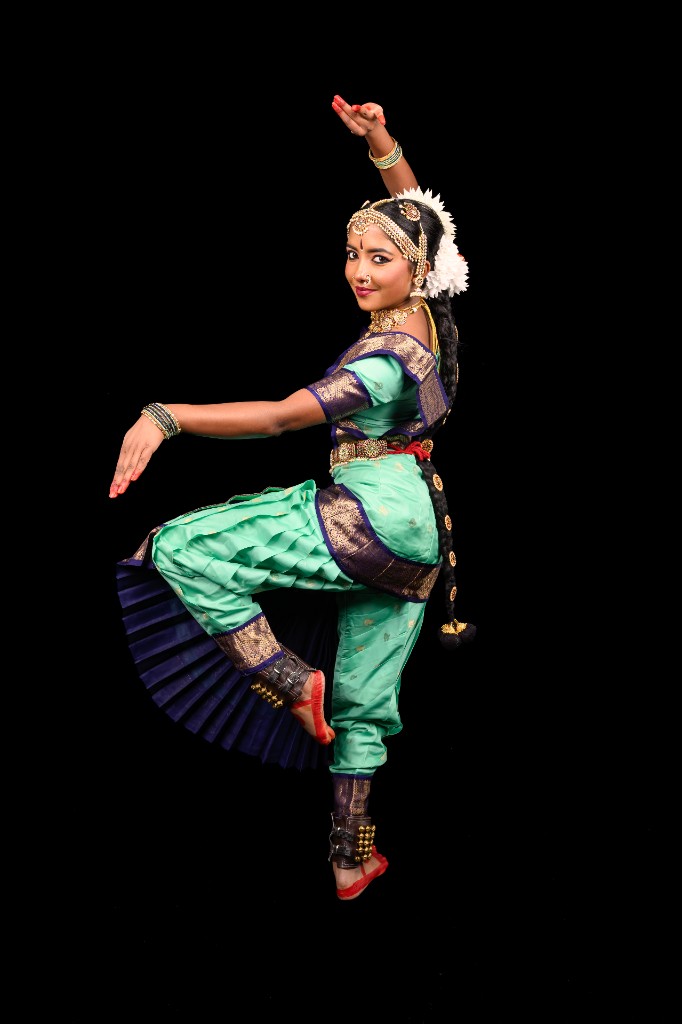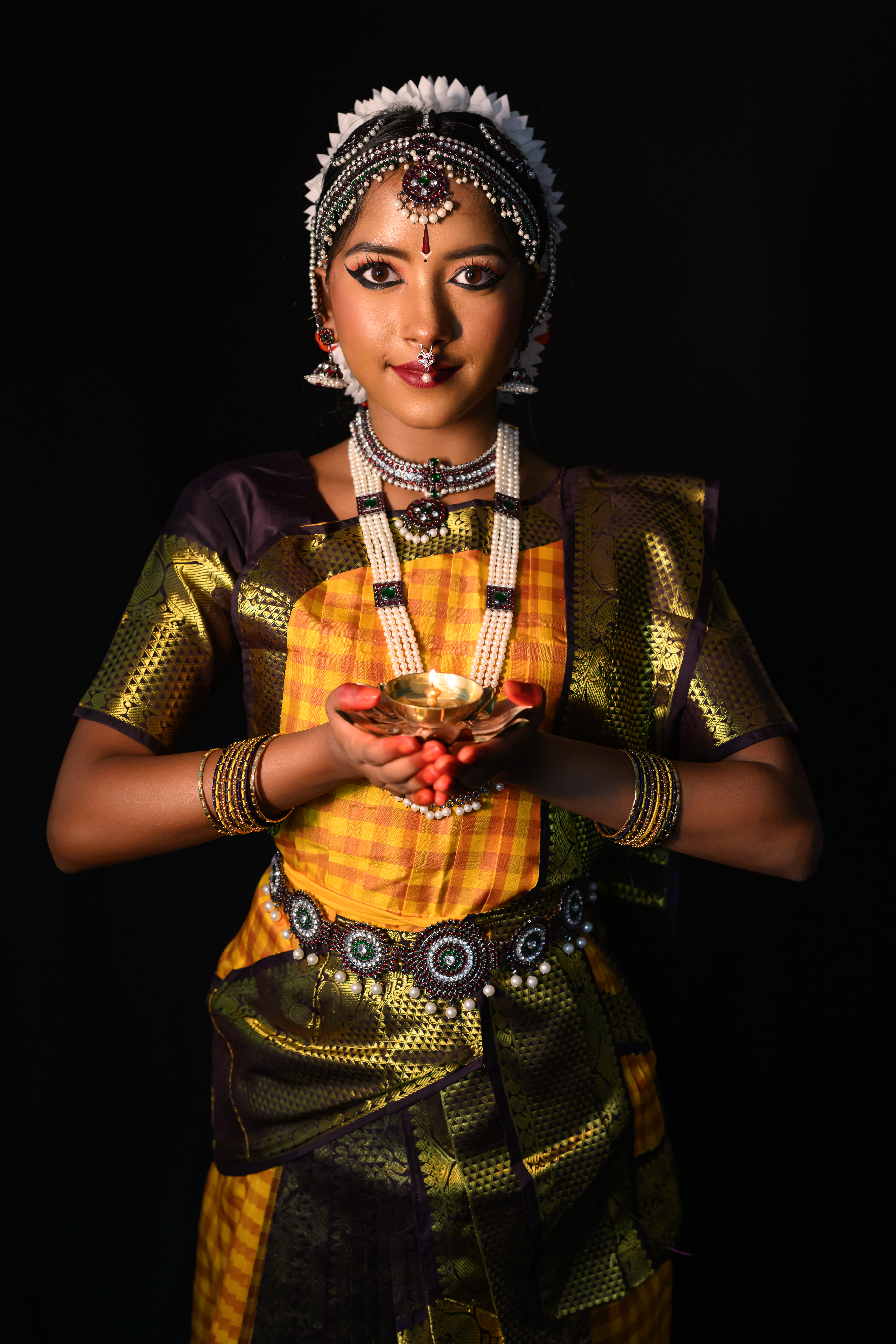
Tanvika Karupakula Bharathanatyam program
Bharathanatyam Arangetram

Program

Tanvika's arangetram is arranged as a traditional Bharathanatyam margam, moving from invocation and pure rhythm into expressive storytelling shaped by
Shakthi - The Power Within.

Saturday, September 5, 2026 · 2:30 PM PDT

Dublin High School, 8151 Village Parkway, Dublin, CA 94568

1.a

Pushpanjali

Ragam Saraswathi Thalam Adi
Choreography Guru Smt. Chandna Talluri

A traditional devotional opening item in Bharatanatyam. It serves as an invocation piece asking for the blessings of Goddess Saraswathi—the deity of knowledge, music, arts, wisdom, and learning—before beginning a performance or practice session.
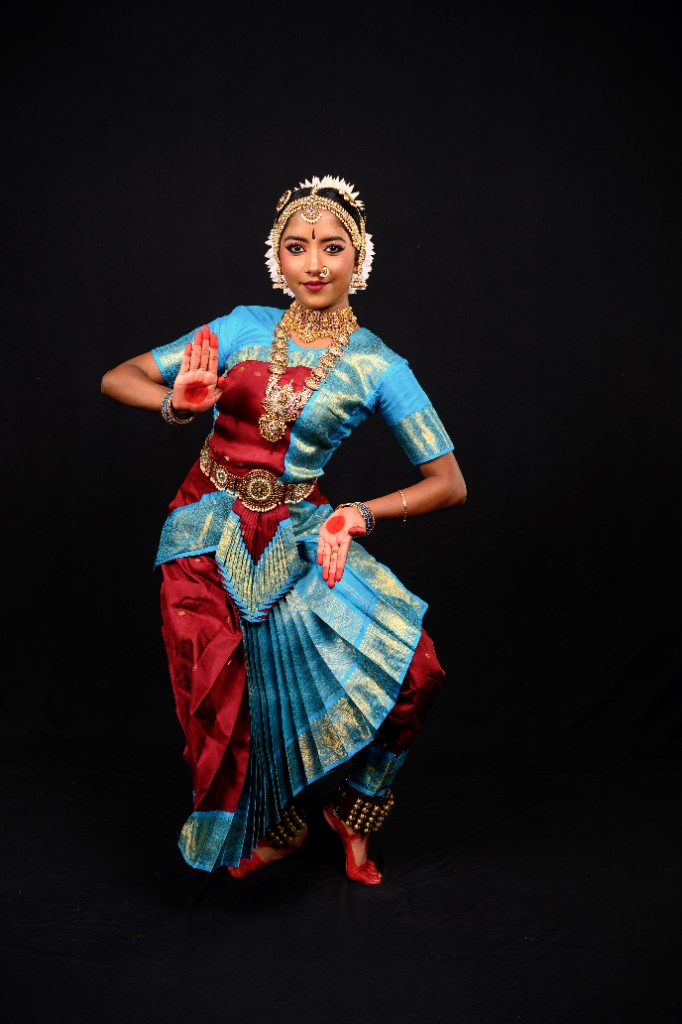
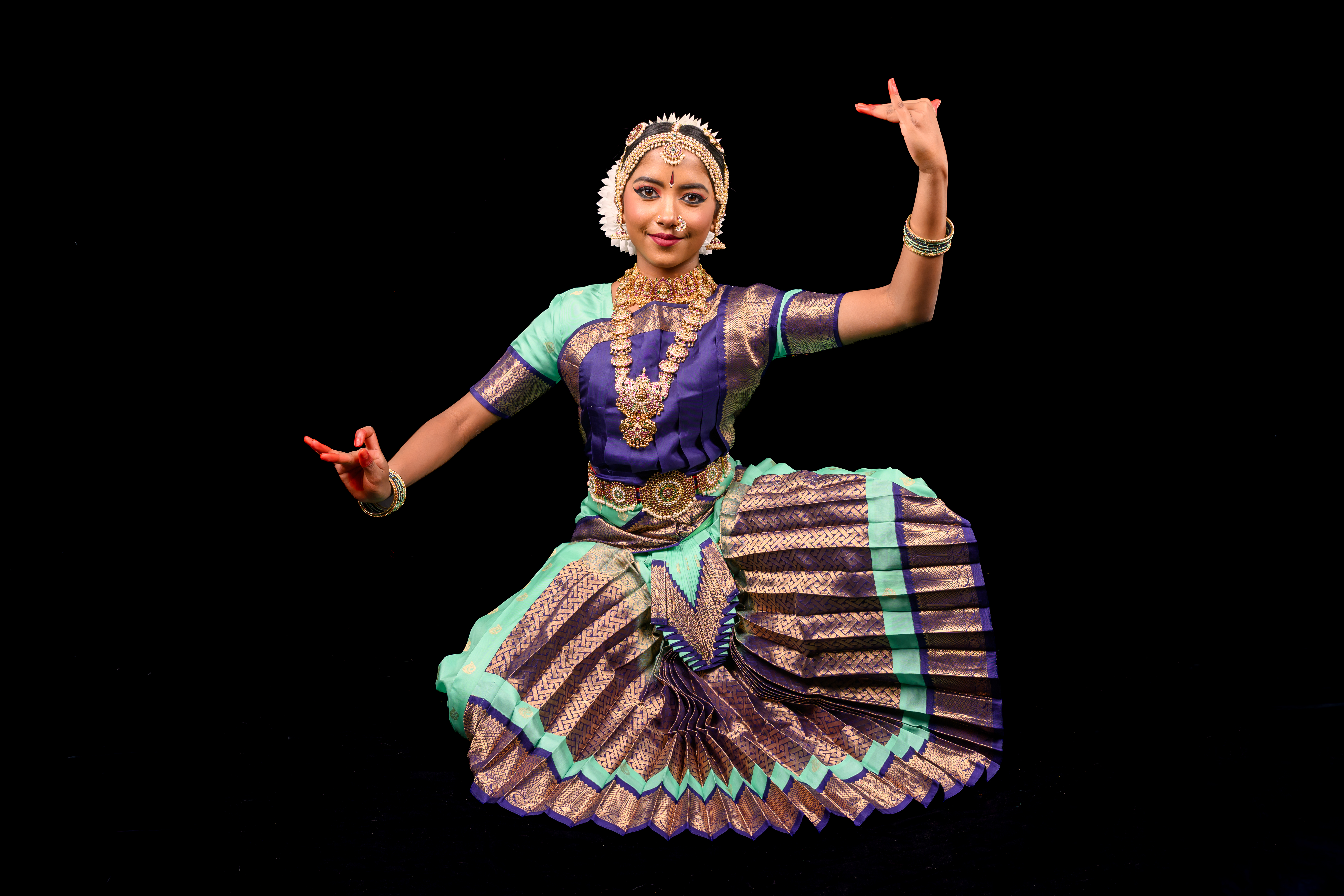
Pushpanjali
1.b

Saraswathi Kouthvam

Ragam Vagdheshwari Thalam Chaturashra Eka
Choreography Guru Smt. Chandna Talluri

A structured rhythmic hymn (Kouthvam) dedicated to Goddess Saraswathi. It weaves together complex rhythmic syllables (jatis) with poetic descriptions praising the Goddess's pure white attire, her Veena, and her ability to dispel the darkness of ignorance.

Saraswathi Kouthvam
02

Mahalakshmi Ashtaka Alarippu

Ragam Ragamalika Thalam Misra Chapu
Choreography Dr Sridhar Vasudevan

An Alarippuu is the pure abstract dance piece placed at the very beginning of a dancer's repertoire to invoke divine grace and awaken the body. Dedicated or structured around Goddess Lakshmi, it focuses on unlocking the joints, warming up the body, and coordinating rhythm with gentle eye, neck, and limb movements.

Mahalakshmi Ashtaka Alarippu
03

Kirtana — Sharade Shyamala, Shyamale Sharada

Ragam Saraswathi Thalam Tishra Adi
Choreography Guru Smt. Chandna Talluri

“Sharade Shyamala, Shyamale Sharada” (శారదే శ్యామలా, శ్యామలే శారదా) is a popular devotional hymn and song dedicated to Goddesses Sharada and Shyamala (forms of Saraswati and Adi Shakti), often associated with the holy seat of Sringeri.

This song immaculately describes the oneness in Saradamba and Syamala Devi, the deities that shower imperishable knowledge and arts on the entire universe.

Kirtana — Sharade Shyamala, Shyamale Sharada
04

Devi Varnam — Simhavahini Sri Rajeshwari

Ragam Ragamalika Thalam Adi
Choreography Guru Smt. Chandna Talluri

A Varnam is the core, longest, and most intricate piece in Bharatanatyam, combining heavy rhythmic patterns (jatis) with elaborate storytelling (abhinaya). It weaves complex emotional themes, yearning for the divine, and brilliant technical footwork.

Devi Varnam — Simhavahini Sri Rajeshwari

Interval

05

Bathukamma

Ragam Folk Melody Thalam Traditional Folk Beat
Choreography Guru Smt. Chandna Talluri

A vibrant folk track celebrating the cultural festival of Bathukamma, which honors womanhood and nature using colorful flowers. The song praises the Mother Goddess (Gowramma), expressing community spirit, joyful gathering, and rhythmic circular folk movements.

Bathukamma
06

Kuruvanji

Ragam Punnagavarali Thalam Adi / Misra Chapu
Choreography Guru Smt. Chandna Talluri

Rooted in the traditional Tamil dance-drama genre, a Kuruvanji tells a romantic or devotional story—often featuring a gypsy fortune-teller (Kurathi) who predicts the union of the heroine with her divine or earthly beloved, rich with poetic dialogues and expressive storytelling (abhinaya).

Kuruvanji
07

Mahishasura Mardini

Ragam Revathi Thalam Adi
Choreography Guru Smt. Chandna Talluri

powerful, highly rhythmic devotional hymn (Stotram) consisting of 21 exquisite Sanskrit verses praising Goddess Durga in her fierce yet deeply compassionate form as the vanquisher of the buffalo demon, Mahishasura.

Navarasa Rama Keertanam
08

Thillana - Hamsanandi

RagamHamsanandi Thalam Adi
Choreography Guru Smt. Chandna Talluri

A vibrant, fast-paced concluding piece of a Bharatanatyam recital. Lyrically and musically, it celebrates the majestic grace, beauty, and dynamic energy of Lord Muruga riding his vehicle, the peacock, bringing the performance to a joyous climax.

Thillana - Hamsanandi
09

Mangalam

Ragam Behag Thalam Adi
Choreography Guru Smt. Chandna Talluri

The traditional concluding song of a classical performance or practice. It offers gratitude to the deities, the musicians, the gurus, and the audience, wishing universal peace, prosperity, and auspiciousness (Mangalam) to all present.

Mangalam